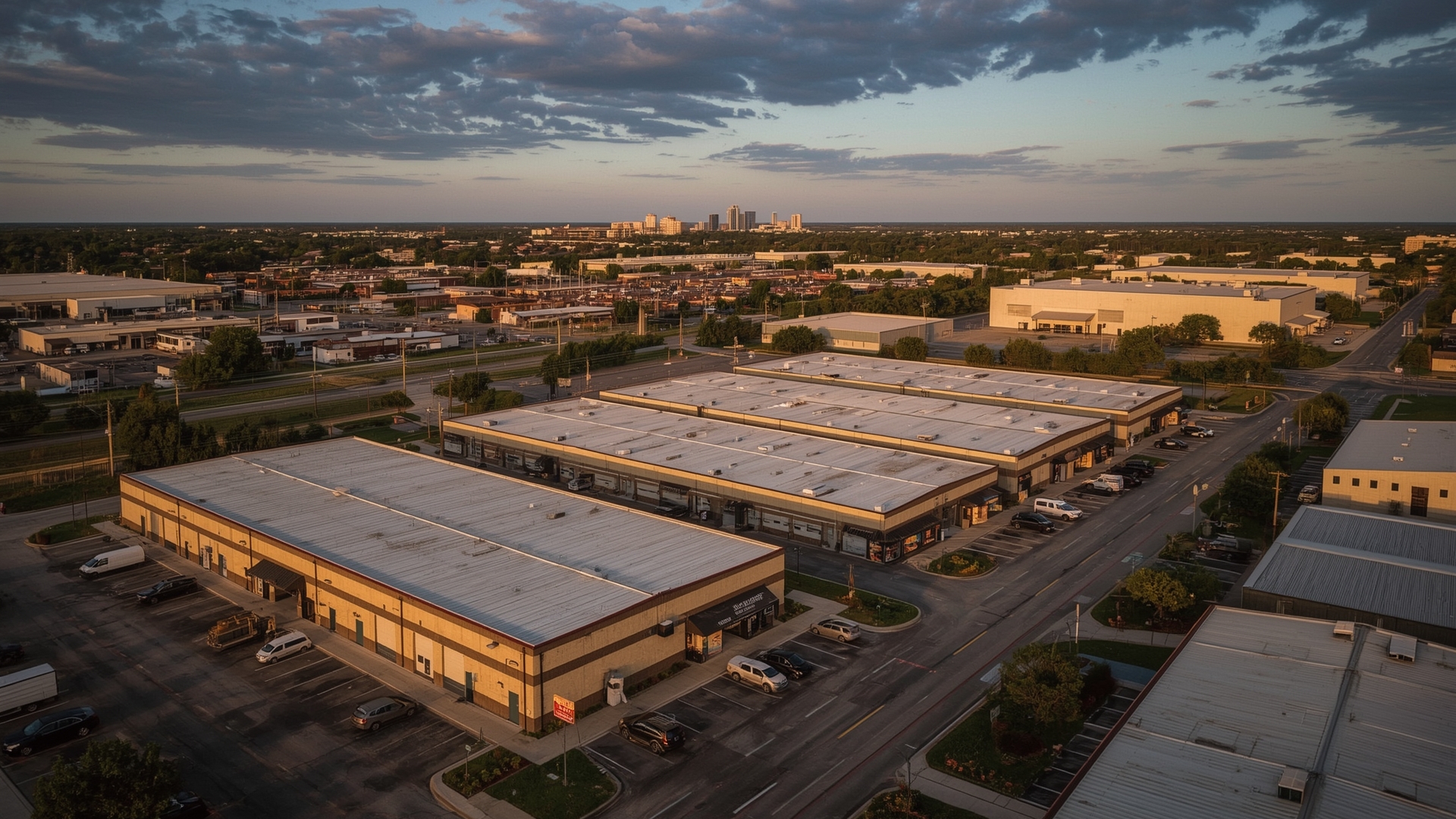
The federal government sets aside billions of dollars every year for small businesses in historically underutilized areas. If your business is located in one of those areas — and most of your employees live there too — you may qualify for a program that gives you a direct edge in federal contracting: HUBZone certification.
Texas has hundreds of HUBZone-designated areas, from rural counties in West Texas to urban census tracts in Houston and San Antonio. The challenge is knowing whether you qualify, understanding what the certification actually gives you, and building a strategy around it. This guide covers all of that in plain terms.
Key Takeaways
- HUBZone stands for Historically Underutilized Business Zone — it’s a federal small business certification managed by the SBA.
- Texas has hundreds of eligible HUBZone areas, including rural counties, tribal lands, and urban census tracts.
- Three core requirements apply: your business must be located in a HUBZone, at least 35% of your employees must live in a HUBZone, and you must be a small business by SBA size standards.
- HUBZone gives you three contracting advantages: set-aside contracts, sole-source authority up to $5 million (manufacturing) or $4.5 million (services), and a 10% price evaluation preference in full-and-open competition.
- You can hold HUBZone and 8(a) certification at the same time, which dramatically expands your contracting access.
- Annual attestation and a three-year recertification keep you in the program — eligibility isn’t permanent.
What Is HUBZone Certification and Why Does It Matter for Texas Businesses?

Quick Answer: HUBZone certification is an SBA program that gives small businesses in designated low-income or rural areas preferred access to federal contracts. Certified businesses get set-asides, sole-source eligibility, and a 10% price advantage in competitive bidding.
HUBZone stands for Historically Underutilized Business Zone. The program was created by Congress in 1997 to stimulate economic growth in areas with high unemployment or low household income. The idea is straightforward: direct federal spending toward businesses rooted in struggling communities.
For Texas businesses, the opportunity is real. Texas has a large number of HUBZone-designated areas, which means more businesses qualify here than in many other states. Rural counties, colonias along the Texas-Mexico border, tribal lands, and urban census tracts in major cities can all be HUBZone eligible.
Getting certified gives you three direct contracting advantages. You can compete for HUBZone set-aside contracts that non-certified businesses cannot bid on. You qualify for sole-source awards without competition, up to specific dollar thresholds. And in full-and-open competitions, the government applies a 10% price evaluation preference — meaning your bid can be 10% higher than a competitor’s and still win.
What Are the Core Eligibility Requirements for HUBZone Certification?
Quick Answer: To qualify, your business must be at least 51% owned by U.S. citizens, located in a HUBZone area, meet SBA size standards for your industry, and have at least 35% of employees living in a HUBZone.
The SBA uses four eligibility rules to determine whether a business qualifies. You need to meet all four — not just some of them.
Ownership and Control
Your business must be at least 51% owned and controlled by U.S. citizens. This applies to individuals, not corporations or other entities. Community Development Corporations (CDCs), agricultural cooperatives, and Indian tribal governments can also qualify under alternative ownership rules.
Business Size
You must qualify as a small business under SBA size standards for your primary industry. Size standards vary by NAICS code — some use employee count (like manufacturing), others use average annual receipts (like most service industries). You can verify your size standard on the SBA’s size standards tool using your NAICS code.
Principal Office Location
Your principal office — the place where the largest share of your employees work — must be physically located in a HUBZone. A P.O. box or registered agent address does not count. The address must be where real business operations happen.
Employee Residency Requirement
At least 35% of your employees must live in a HUBZone. This is often the hardest requirement to maintain. It counts all employees, including part-time workers. If you have 10 employees, at least 4 of them must reside in a HUBZone address — not just work near one.
| Requirement | Threshold | Key Detail |
|---|---|---|
| U.S. Citizen Ownership | 51% minimum | Must be individuals, not entities |
| SBA Size Standard | Varies by NAICS code | Based on employees or annual receipts |
| Principal Office in HUBZone | 100% required | Physical operations address, not P.O. box |
| Employee HUBZone Residency | 35% of all employees | Includes part-time workers |
| Recertification Cycle | Every 3 years | Annual attestation also required |
Where Are HUBZone Designated Areas Located in Texas?
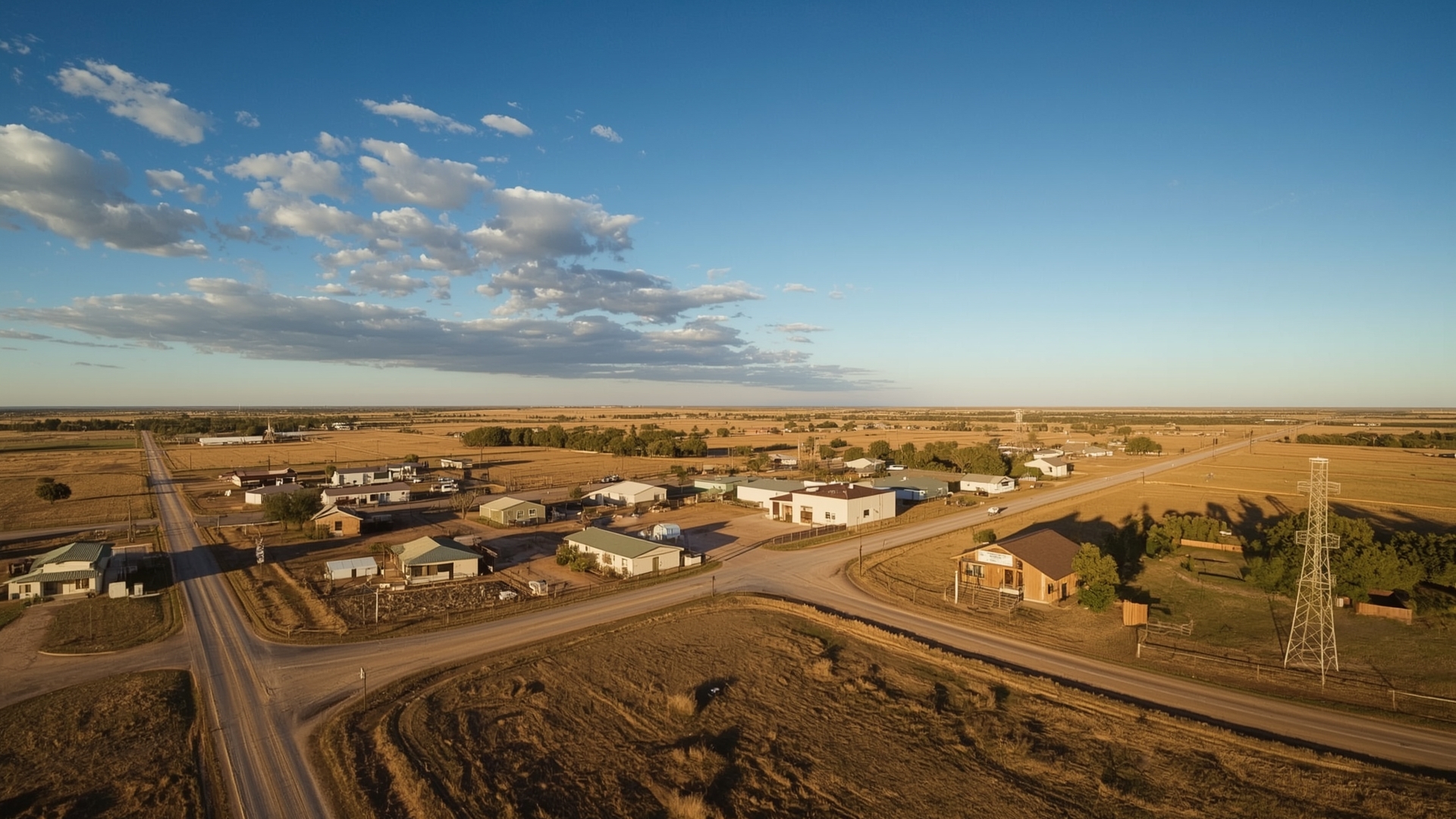
Quick Answer: Texas HUBZone areas include qualifying census tracts in Houston, San Antonio, Dallas, and El Paso, plus rural counties, tribal lands in East Texas, and border colonias. Use the SBA’s HUBZone map tool to search any address.
Texas has several categories of HUBZone-designated areas. Each category qualifies under a different set of federal criteria.
Qualified Census Tracts
These are urban areas with low median household income or high poverty rates. Major Texas cities — Houston, San Antonio, Dallas, Fort Worth, El Paso, and Laredo — all have qualifying census tracts. These are not full cities; they are specific zip codes and neighborhoods within those cities.
Nonmetropolitan Counties
Rural counties with unemployment rates above the national average qualify as HUBZone areas. West Texas, the Panhandle, and parts of East Texas have multiple qualifying counties. If your business operates in a small rural county, there’s a strong chance it falls within a designated area.
Redesignated Areas
When an area no longer meets the poverty or unemployment thresholds, it doesn’t immediately lose HUBZone status. It gets redesignated for an additional three-year period. This protects businesses already operating in those areas from losing eligibility abruptly.
Tribal Lands and Military Base Closure Areas
Recognized tribal land in Texas qualifies automatically. Certain areas near closed military bases may also be designated. These are less common in Texas but worth checking if your business is near a former military installation.
How to Check a Specific Address
The SBA provides a free HUBZone map at sba.gov. You enter any address — your business location or an employee’s home — and the map tells you whether it falls inside a designated area. Check both your business address and your employees’ addresses before assuming eligibility.
What Federal Contracting Benefits Does HUBZone Certification Unlock?
Quick Answer: HUBZone certification provides three contracting advantages: set-aside contracts limited to HUBZone firms, sole-source awards up to $4.5 million for services or $7 million for manufacturing, and a 10% price evaluation preference in open competition.
The contracting benefits are the reason businesses pursue this certification. They are specific and measurable — not just a label on your profile.
Set-Aside Contracts
Federal agencies can designate contracts as HUBZone set-asides. Only certified HUBZone businesses can bid. This eliminates large prime contractors from competition entirely. The federal government has a statutory goal of awarding 3% of all prime contracting dollars to HUBZone firms each year.
Sole-Source Awards
Contracting officers can award contracts directly to a HUBZone firm without a competitive process, as long as the price is fair and reasonable. The thresholds for sole-source HUBZone awards are $4.5 million for service contracts, $7 million for manufacturing contracts, and $4.5 million for all other contracts.
Price Evaluation Preference
In full-and-open competitions where non-HUBZone firms are also bidding, the government evaluates HUBZone bids at a 10% discount. If a non-HUBZone firm bids $100,000, a HUBZone firm bidding $110,000 is treated as if they bid $99,000 — and wins. This advantage does not apply when competing against other small business set-asides.
| Benefit Type | Threshold or Rate | Competition Level |
|---|---|---|
| Set-Aside Contracts | No dollar limit | HUBZone firms only |
| Sole-Source (Services) | Up to $4.5 million | No competition required |
| Sole-Source (Manufacturing) | Up to $7 million | No competition required |
| Price Evaluation Preference | 10% advantage | Full-and-open competition |
| Federal Contracting Goal | 3% of prime contract dollars | Government-wide statutory target |
How Do You Apply for HUBZone Certification Through the SBA?
Quick Answer: Apply through the SBA’s certify.SBA.gov portal. You’ll need your SAM.gov registration, business formation documents, lease or ownership proof for your principal office, and documentation showing employee HUBZone residency. SBA reviews take up to 90 days.
The application process is entirely online through the SBA’s certification platform. Before you start, make sure your SAM.gov registration is active — you cannot apply without it.
Step 1: Verify Your Address and Employee Addresses
Use the SBA HUBZone map to confirm your business address qualifies. Then check each employee’s home address the same way. Document the results before applying — you’ll need to show that at least 35% of employees live in a designated area.
Step 2: Gather Required Documents
The SBA will request specific documents during the application. Prepare these in advance to avoid delays.
- Business formation documents (articles of incorporation, operating agreement, or partnership agreement)
- Lease agreement or deed for your principal office address
- Payroll records showing employee names and addresses
- Proof of employee HUBZone residency (utility bills, driver’s licenses, or lease agreements)
- Federal tax returns or financial statements showing business size
- Ownership and citizenship documentation for all owners with 20%+ interest
Step 3: Submit Through certify.SBA.gov
Log in with your SAM.gov credentials, complete the HUBZone application, and upload your documents. The SBA assigns a reviewer who may request additional information during the process.
Step 4: Respond Promptly to Reviewer Requests
If the reviewer asks for clarification or additional documents, you typically have 14 days to respond. Missing this window can result in a denial. Treat reviewer requests as high priority.
Step 5: Receive Your Certification Decision
The SBA targets a 90-day review window. Once approved, your certification appears in SAM.gov and in the Dynamic Small Business Search (DSBS) database, which contracting officers use to find eligible vendors.
| Stage | Typical Duration | Action Required |
|---|---|---|
| Address verification | 1-2 days | Business and employee address checks |
| Document preparation | 1-2 weeks | Gather payroll, lease, ownership docs |
| SBA review period | Up to 90 days | Respond to any reviewer requests within 14 days |
| Certification active | Upon approval | Appears in SAM.gov and DSBS |
| Annual attestation | Yearly | Confirm continued eligibility |
| Recertification | Every 3 years | Full eligibility re-review |
How Do You Maintain HUBZone Certification After Approval?
Quick Answer: You must complete an annual attestation to confirm your business still meets all eligibility requirements. Full recertification happens every three years. The 35% employee residency rule is the most common reason businesses lose their certification.
Getting certified is step one. Staying certified requires active management of your eligibility — especially the employee residency requirement, which can shift as you hire and employees move.
Annual Attestation
Each year, the SBA sends you a notice to confirm your continued eligibility. You log into certify.SBA.gov and attest that your business still meets all four requirements. This is not optional. Missing it can result in decertification.
Three-Year Recertification
Every three years, the SBA conducts a full review of your eligibility. This is similar to the original application — you’ll need updated documents, payroll records, and address verification. Start preparing at least 60 days before your recertification date.
Monitoring the 35% Employee Residency Rule
This is the requirement that causes the most compliance problems. As your company grows and hires new employees, the percentage of employees living in HUBZone areas can drop. When you hire, document each new employee’s home address and verify it against the HUBZone map immediately. If your ratio drops below 35%, you are technically out of compliance — even before a formal review.
What Happens When Your Principal Office Moves
If you relocate your principal office to a non-HUBZone address, you immediately become ineligible. You can still fulfill existing HUBZone contracts, but you cannot pursue new ones. If the move is to another HUBZone address, notify the SBA and update your SAM.gov profile.
Can a Texas Small Business Hold HUBZone and 8(a) Certification at the Same Time?
Quick Answer: Yes. HUBZone and 8(a) certifications are separate programs with separate eligibility rules. Holding both gives you access to 8(a) sole-source and set-aside contracts plus HUBZone set-aside and price preference benefits simultaneously.
Stacking HUBZone with 8(a) certification is one of the most powerful contracting strategies available to eligible Texas small businesses. These are two independent federal certification programs. Qualifying for one does not affect eligibility for the other.
What 8(a) Certification Adds
The SBA’s 8(a) Business Development Program helps small businesses owned by socially and economically disadvantaged individuals. It offers a nine-year program period, access to 8(a) set-aside contracts, and sole-source authority up to $4.5 million for services and $7 million for manufacturing contracts. It also provides mentorship and business development support through the SBA.
How the Two Programs Work Together
A business with both certifications can compete in four separate contract pools: open competition (with HUBZone price preference), HUBZone set-asides, 8(a) set-asides, and sole-source awards under either program. Contracting officers can use either certification to justify an award — giving you two different legal pathways to the same contract.
Which to Pursue First
If you meet 8(a) eligibility requirements, apply for 8(a) first. The 8(a) program has a nine-year limit — every year you delay is a year of eligibility lost. HUBZone certification renews indefinitely as long as you remain eligible. Pursue 8(a) immediately, then layer in HUBZone once your 8(a) application is active.
| Attribute | HUBZone | 8(a) |
|---|---|---|
| Eligibility Basis | Geographic location and employee residency | Social and economic disadvantage of owner |
| Program Duration | Indefinite (renewal every 3 years) | 9 years (4-year developmental + 5-year transitional) |
| Sole-Source Limit (Services) | $4.5 million | $4.5 million |
| Sole-Source Limit (Manufacturing) | $7 million | $7 million |
| Price Evaluation Preference | 10% in full-and-open competition | None |
| Business Development Support | None | SBA mentorship, training, and development |
| Annual Reporting | Annual attestation | Annual review with SBA district office |
What Common Mistakes Cause HUBZone Applications to Get Denied?
Quick Answer: The most common denial reasons are failing to prove 35% employee HUBZone residency, using a virtual or non-operational office address as the principal office, and missing or incomplete documentation during the SBA review period.
Most denials come down to documentation problems — not actual ineligibility. Understanding where applications fail helps you avoid the same mistakes.
Using a Virtual Office or Mailbox Address
The SBA requires that your principal office be a real place where employees work. A shared coworking desk, virtual office service, or registered agent address does not qualify. If the SBA reviewer visits or researches your address and finds no real operations, your application is denied. You need a physical address with a lease or ownership deed, and employees must actually work there.
Not Being Able to Prove Employee Residency
Claiming that 35% of employees live in a HUBZone is not enough — you have to prove it. The SBA wants documents like utility bills, driver’s licenses, or lease agreements showing the employee’s actual home address. If employees cannot produce these, or their documents show a different address, the residency requirement fails.
Miscounting Employees
Part-time employees count toward total headcount. If you have 8 full-time employees and 2 part-time employees, your total is 10 — and you need 4 living in a HUBZone. Some businesses calculate based on full-time equivalents only and get the math wrong.
Slow Response to SBA Reviewer Requests
The SBA gives you 14 days to respond to any information request. Missing that deadline is treated as an inability to prove eligibility. Build a process to check your certify.SBA.gov inbox regularly during the review period.
How Should Texas Small Businesses Position Themselves to Win HUBZone Contracts?

Quick Answer: Start by building a strong capability statement, registering in SAM.gov, and searching USASpending.gov to identify which federal agencies buy what you sell. Target agencies with active HUBZone spending history before submitting your first bid.
Getting certified is not the same as winning contracts. Certification gets you into the door — your strategy determines what happens next.
Build a Capability Statement First
A capability statement is a one-page document that tells contracting officers what your business does, who you’ve worked with, and why you’re qualified. It lists your NAICS codes, CAGE code, certifications, past performance highlights, and core competencies. Contracting officers see hundreds of these — make yours specific, not generic.
Find Agencies That Spend in Your NAICS Codes
USASpending.gov shows historical contract awards by agency, NAICS code, and set-aside type. Search for HUBZone set-aside awards in your NAICS code to see which agencies in Texas regularly use the HUBZone program. Target those agencies with outreach before a solicitation is published.
Use the Dynamic Small Business Search (DSBS)
Contracting officers actively search the DSBS database to find qualified vendors for upcoming projects. Make sure your SAM.gov profile is complete and accurate, with your HUBZone status visible, your NAICS codes updated, and a strong business description. An incomplete profile means you’re invisible to pre-solicitation outreach.
Attend Industry Days and Small Business Events
Federal agencies in Texas regularly host small business outreach events, industry days, and procurement conferences. The Procurement Technical Assistance Center (PTAC) in Texas — operated through the state’s PTAC network — offers free one-on-one advising to help small businesses navigate federal contracting. Use these resources to build relationships with contracting officers before a solicitation drops.
Frequently Asked Questions About HUBZone Certification in Texas
Can a home-based business in Texas qualify for HUBZone certification?
Yes, if your home is in a HUBZone-designated area and it is your principal office. You’ll need to show that real business operations happen there — not just administrative tasks. The SBA may request a utility bill or other proof that the address is both your business location and a functioning work environment.
Does a Texas business lose HUBZone status if the designated area changes?
Not immediately. If your area loses its qualifying status, it typically enters a three-year redesignated period. During that window, you remain eligible. After the redesignated period ends, you must relocate to an active HUBZone area to keep your certification.
What is the Dynamic Small Business Search and why does it matter?
The Dynamic Small Business Search (DSBS) is a federal database that contracting officers use to find certified small businesses. Your HUBZone status is visible there once certified. Keeping your SAM.gov profile current ensures you appear in relevant searches before solicitations are even published.
Is there a cost to apply for HUBZone certification?
No. The SBA does not charge a fee to apply for or maintain HUBZone certification. Third-party consultants sometimes charge for application assistance, but the certification itself is free. Be cautious of services that charge large upfront fees for what is a government-run, no-cost process.
What is the Procurement Technical Assistance Center and can it help with HUBZone?
The Procurement Technical Assistance Center (PTAC) is a network of free or low-cost advising centers that help small businesses with federal contracting. Texas has multiple PTAC locations. They can help you verify HUBZone eligibility, review your application documents, and identify contracting opportunities — at no charge.
Can a Texas business qualify for HUBZone if employees work remotely in different states?
Remote employees count toward your total employee headcount, which affects the 35% HUBZone residency calculation. If remote employees live outside any HUBZone area, they dilute your ratio. You need at least 35% of all employees — remote or on-site — to live in a HUBZone area, regardless of which state they’re in.